Split responsibilities
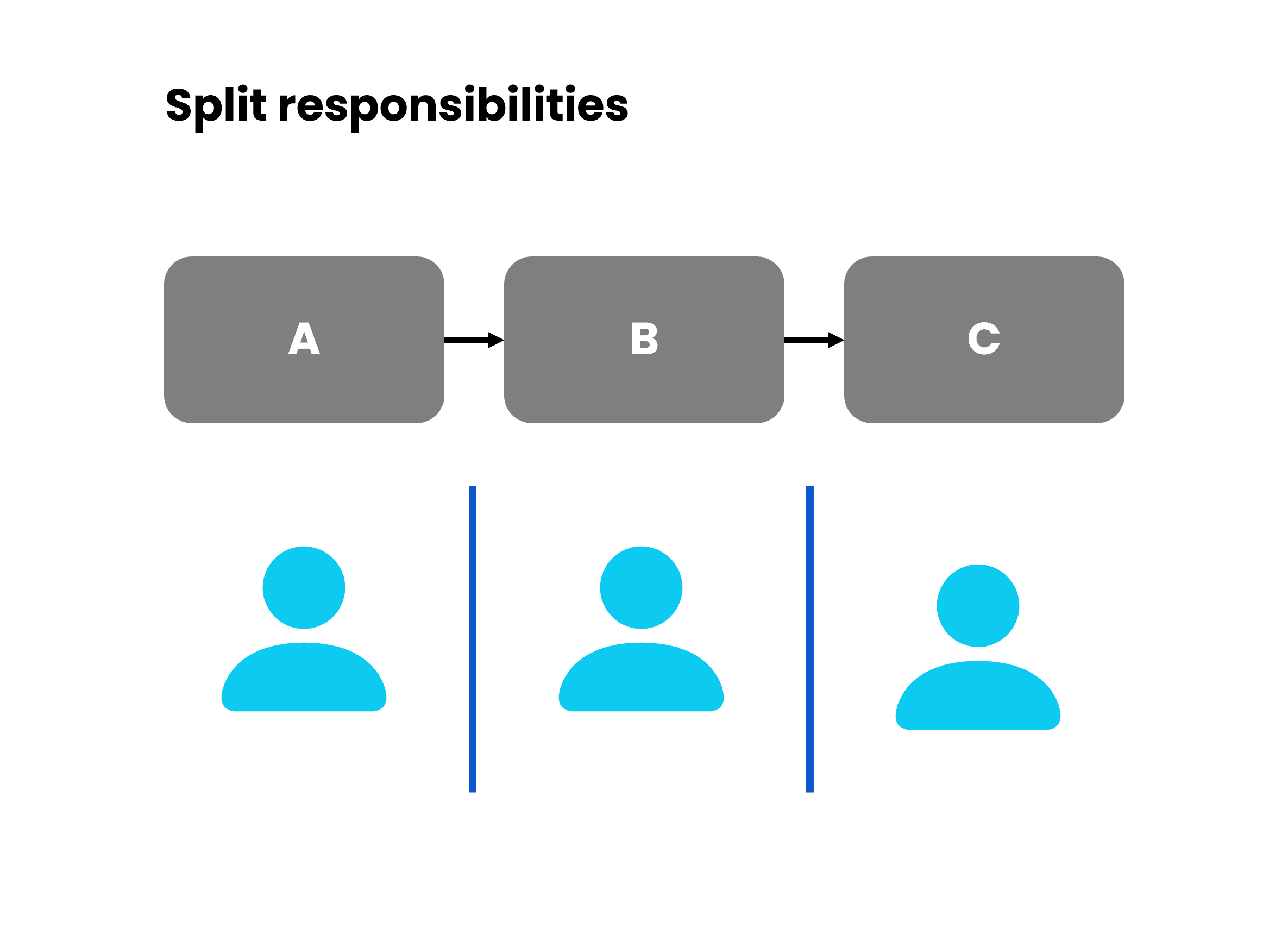
Avoid shared responsibilities for tasks by people from different functional units
Reijers, H., & Liman Mansar, S. (2005). Best practices in business process redesign: an overview and qualitative evaluation of successful redesign heuristics. Omega, 33(4)
Description
The idea behind this redesign pattern is that tasks for which different departments share responsibility are more likely to be a source of neglect and conflict.
Performance considerations
Reducing the overlap in responsibilities should lead to a better quality of task execution. A higher responsiveness to available work items may be developed also, so that clients are served quicker. On the other hand, reducing the effective number of resources that is available for a work item may have a negative effect on its throughput time, as more queuing may occur.
Share this pattern
Enjoy these
Foundational free Patterns
Buffer external information and subscribe to updates
Determine whether activities are related to the same type of case and, if necessary, distinguish new business processes
Order knock-outs by least effort and highest termination probability first.
Minimize numerical involvement
Too many cooks spoil the broth
Collect similar work items and work in batches
Consider whether it is eco-friendly to let humans work over machines
Let customers interact with your organization whenever they want to.
Experience-based task assignment
Delegate task according to experience: execution frequency, case involvement, interactions
Delegate tasks according to resource cost